
Restaurant Branding Case Study: Menu Redesign
MENU SUITE REDESIGN FOR INDIAN SUMMER, BRIGHTON
Indian Summer is one of Brighton's longest established Indian restaurants, with a reputation built on authentic flavours and genuine hospitality. Consistently highly rated, it is particularly known for dishes rooted in the traditions of the Indian diaspora, a cuisine the restaurant has championed in Brighton for over two decades.
Good Noise were commissioned to redesign the restaurant's full menu suite ahead of a spring 2024 relaunch.
The project focused on creating a menu design that reflected the quality of the food and dining experience, demonstrated good value for money and increasing average order value while improving clarity, usability, and consistency across customer touchpoints.
The Role of Menu Design in Hospitality Branding
A restaurant menu is often one of the most important branded touchpoints within the customer journey. Beyond presenting food and drink options, effective menu design helps communicate personality, reinforce positioning, and shape the overall dining experience. For hospitality businesses, a well-designed menu can strengthen brand perception and create a more cohesive experience from first impression to final course.
The Challenge
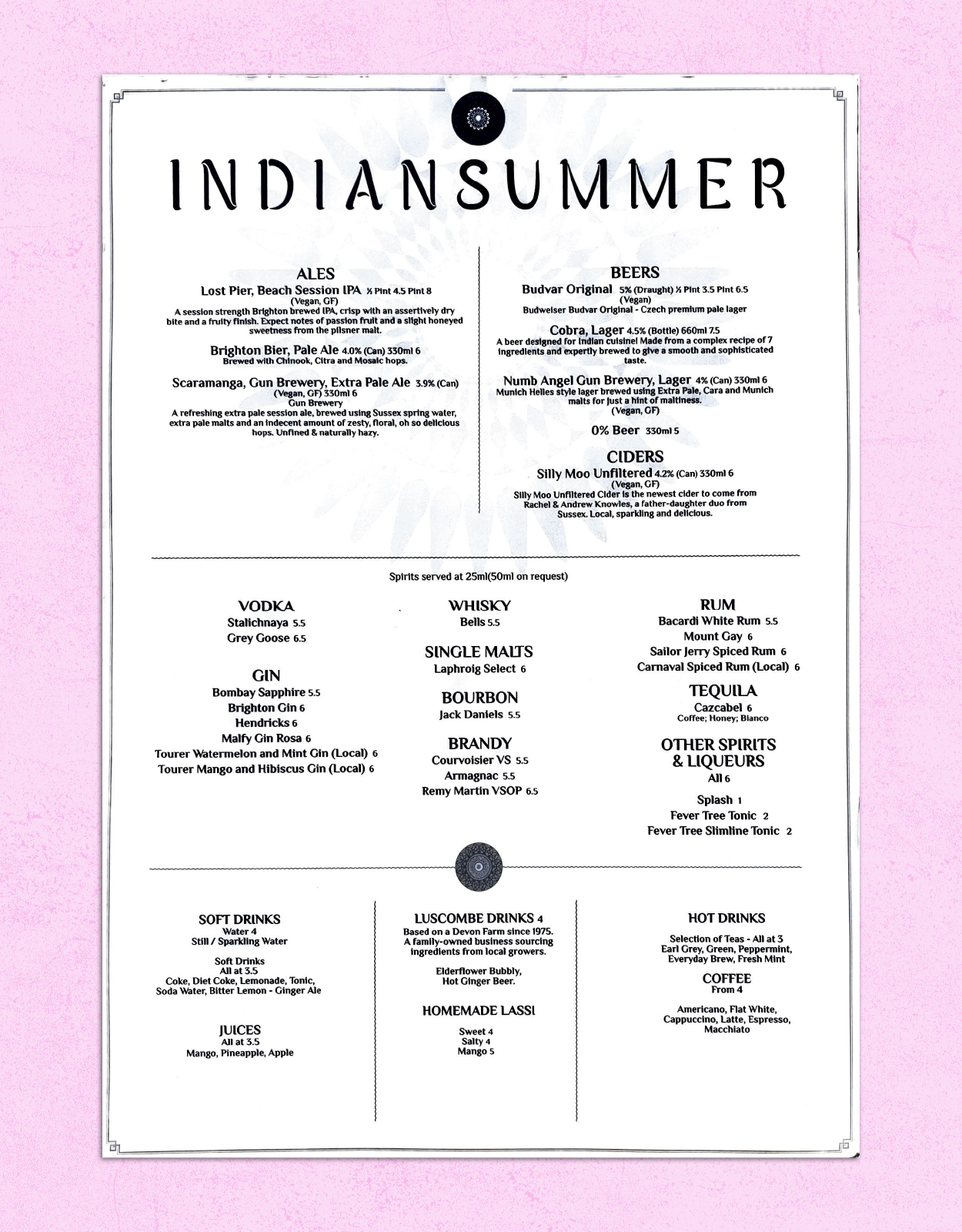
Whilst developing a full brief alongside our client, we identified the existing menus were working against the restaurant in several ways.
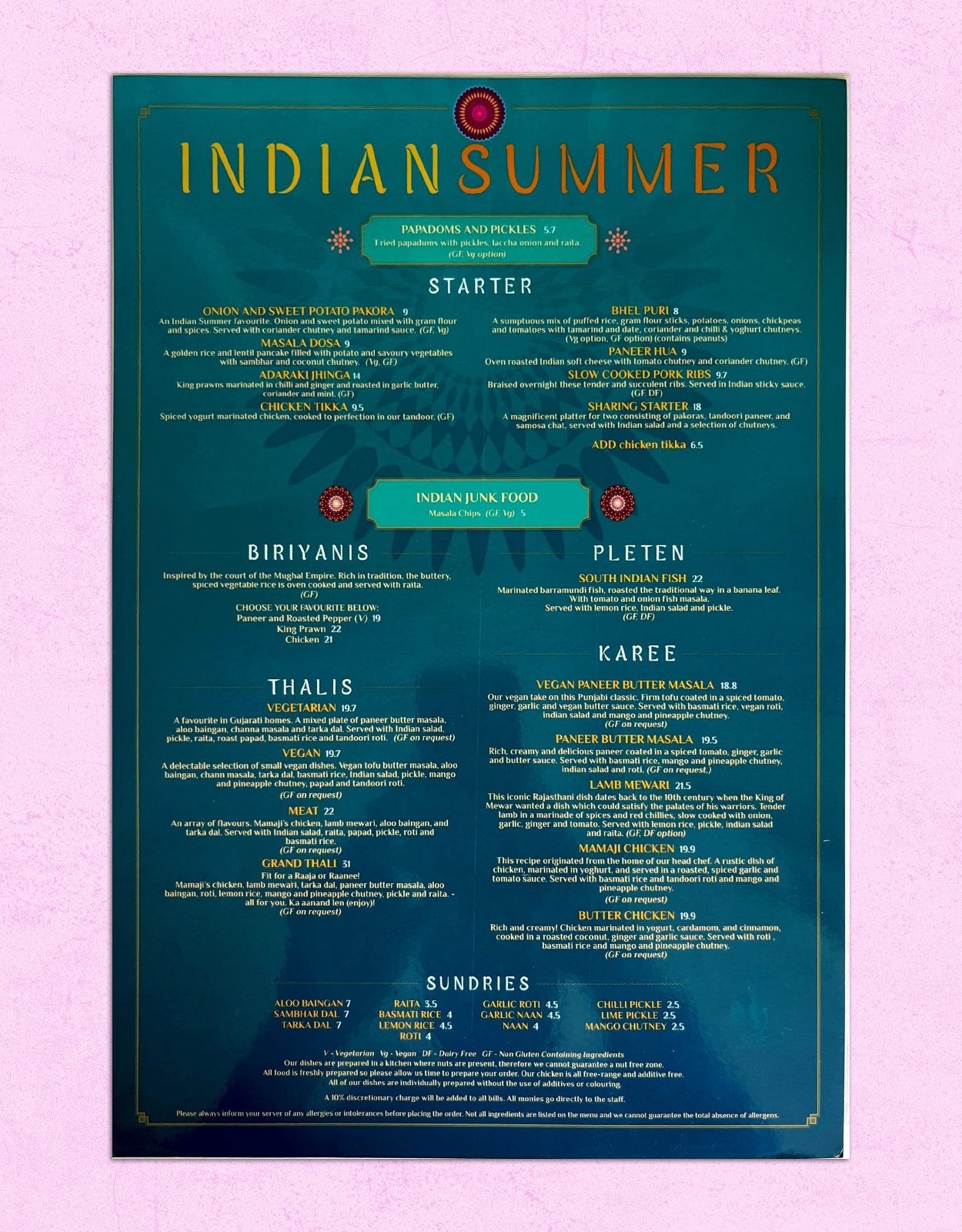
The pricing structure was the most immediate issue. Side dishes were included in the price of main courses, but this wasn't communicated clearly. The result was that dishes appeared more expensive than they actually were, and the restaurant could have been losing customers at the point of decision, not because the value wasn't there, but because the menu wasn't communicating it effectively.
Beyond pricing, the menu structure gave customers little opportunity to customise their dining experience. Sharing wasn't being facilitated or encouraged, and key dishes were not being highlighted. The suite of menus had grown organically over time without a unifying design approach, leaving them visually inconsistent and difficult to read in the low-light conditions typical of a restaurant environment.
For a venue with Indian Summer's reputation, the menus simply weren't doing justice to the quality of the food, the customer experience, or the brand itself.
Our intention was to address all of these challenges while ensuring the redesigned menu suite could be managed and updated efficiently. The new system needed to provide the flexibility to accommodate seasonal menu changes, new dishes, and operational updates without requiring a complete redesign each time.
The project highlighted how menu design can play a significant role in restaurant branding, influencing customer perception long before the first dish reaches the table.
Our Process
We began with a research and discovery phase, reviewing menus from comparable restaurants across the UK to identify approaches that were working and those that weren't. This research informed our thinking long before we moved into the design phase.
The insights gathered fed directly into a workshop with the Indian Summer team, where we explored layout options, refined the menu structure, and established a direction that would support both the customer experience and the practical realities of operating a busy restaurant. Understanding how a menu functions in service, not just how it looks, is central to our approach.
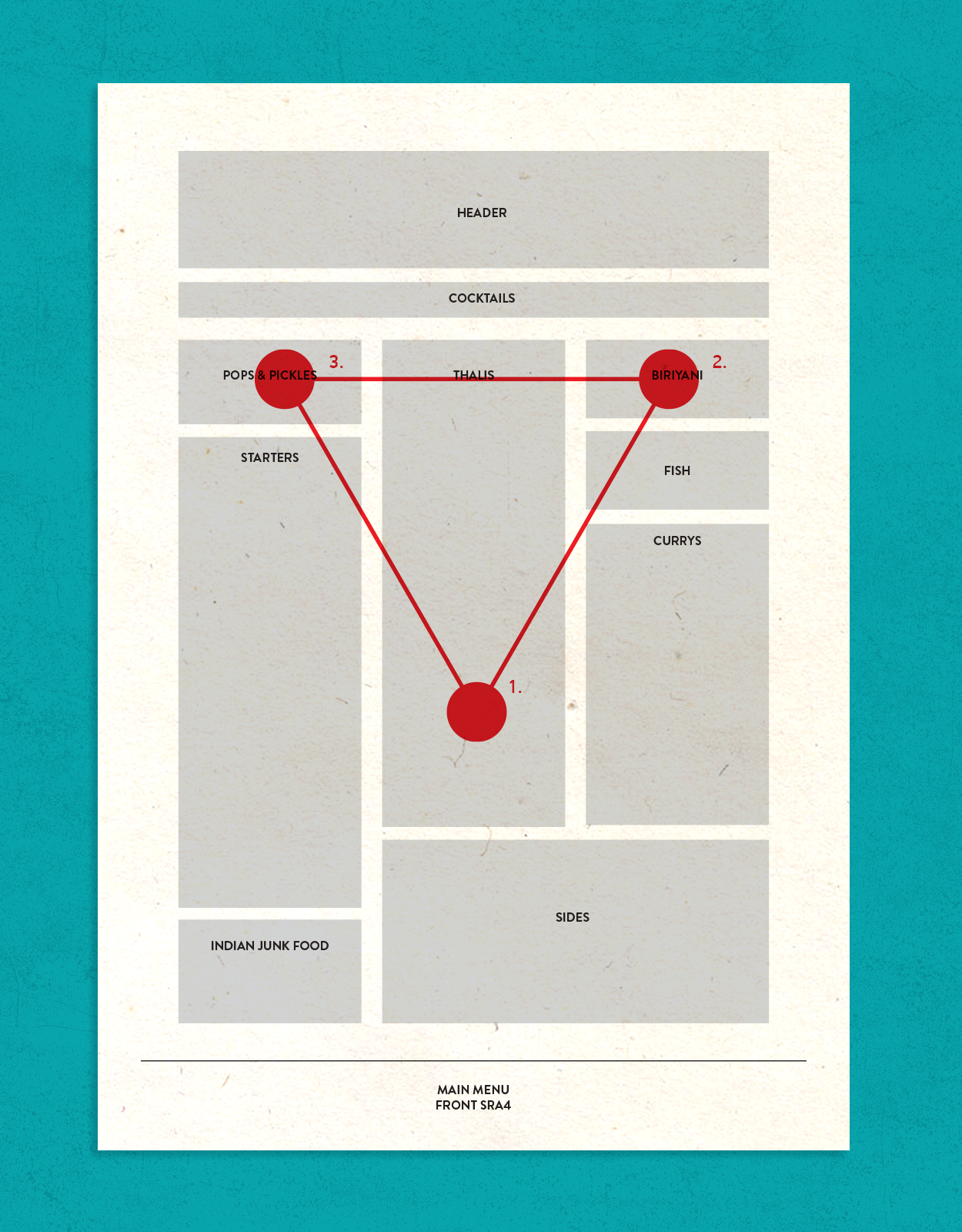
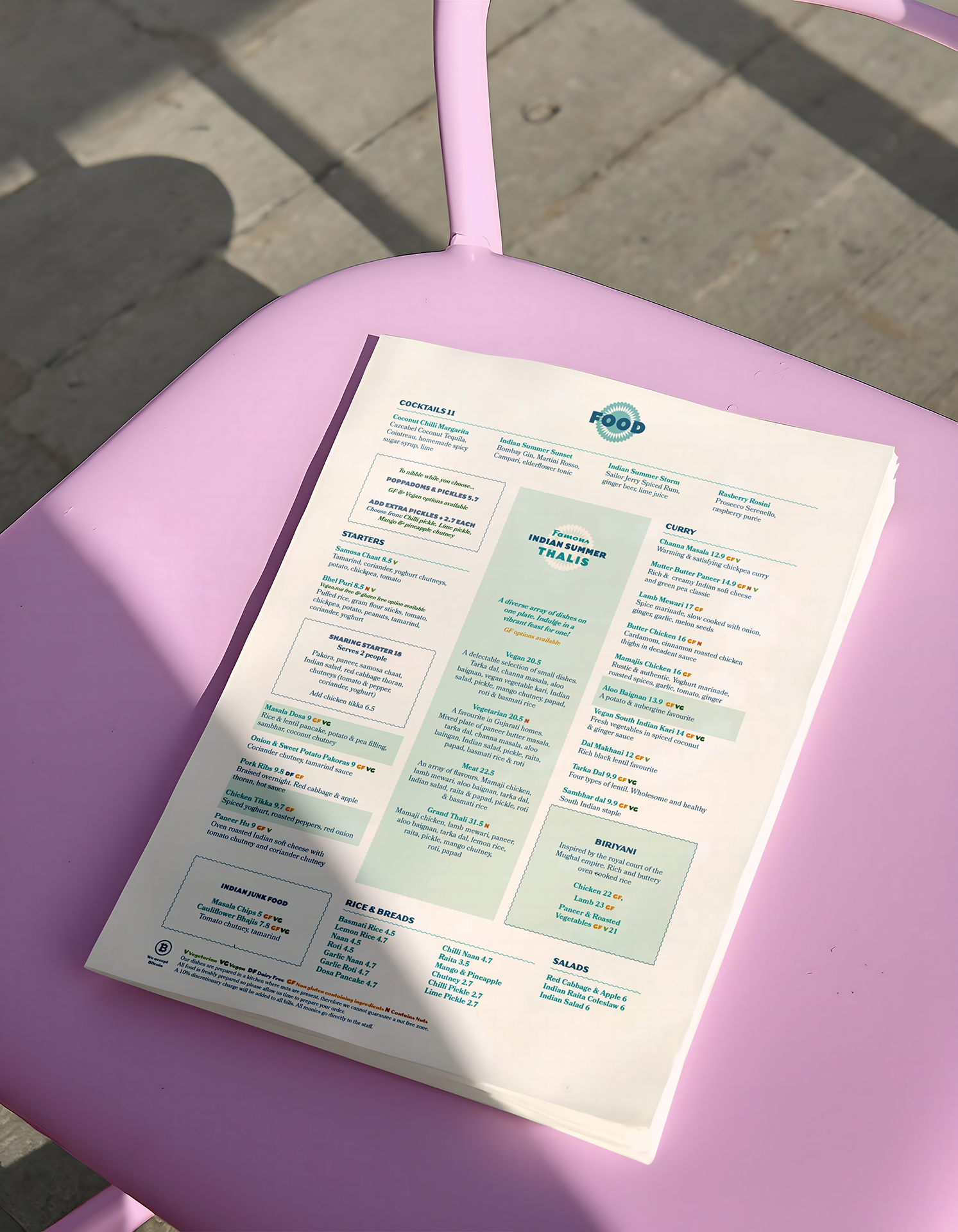
Commercial objectives were embedded within the design strategy from the outset. We applied the 'golden triangle' principle to guide attention towards key dishes and higher-margin menu sections, including the Thalis, Biryani, and Indian Junk Food ranges.
Alongside this, we reviewed how information was prioritised throughout the menu, ensuring customers could navigate options more intuitively while encouraging exploration, sharing, and discovery. The result was a menu structure designed not only to improve usability, but also to support the overall dining experience and reinforce the restaurant's brand positioning.
Effective menu design sits at the intersection of hospitality branding, customer experience, and commercial performance. A successful menu should help guests make decisions confidently while reinforcing the personality and positioning of the restaurant.
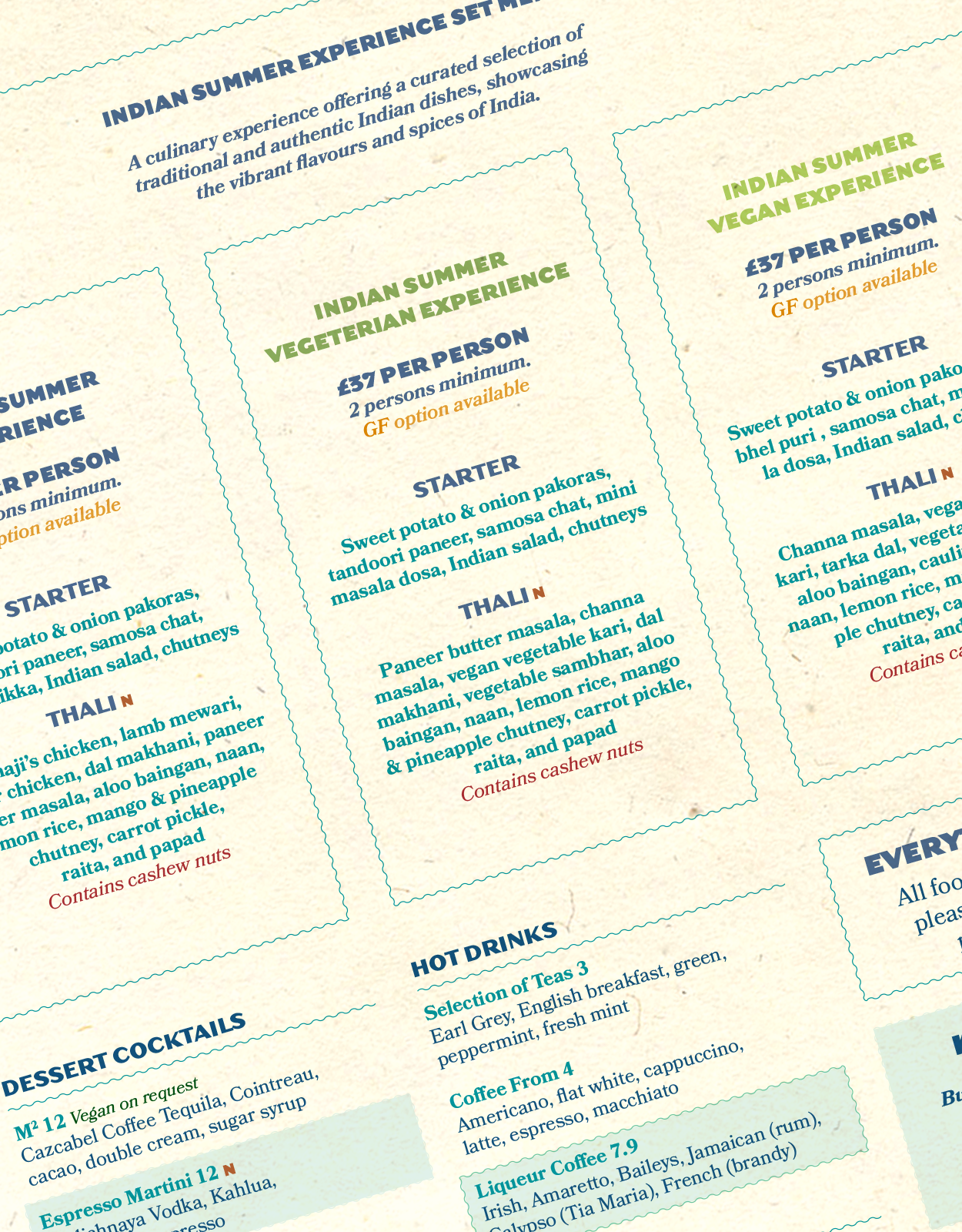
We also identified an opportunity to integrate the set menu into the main lunch and dinner menu, making it more visible and easier for customers to order from. This proved to be one of the most commercially significant decisions of the project, helping to increase the prominence of an important offer while simplifying the customer journey.
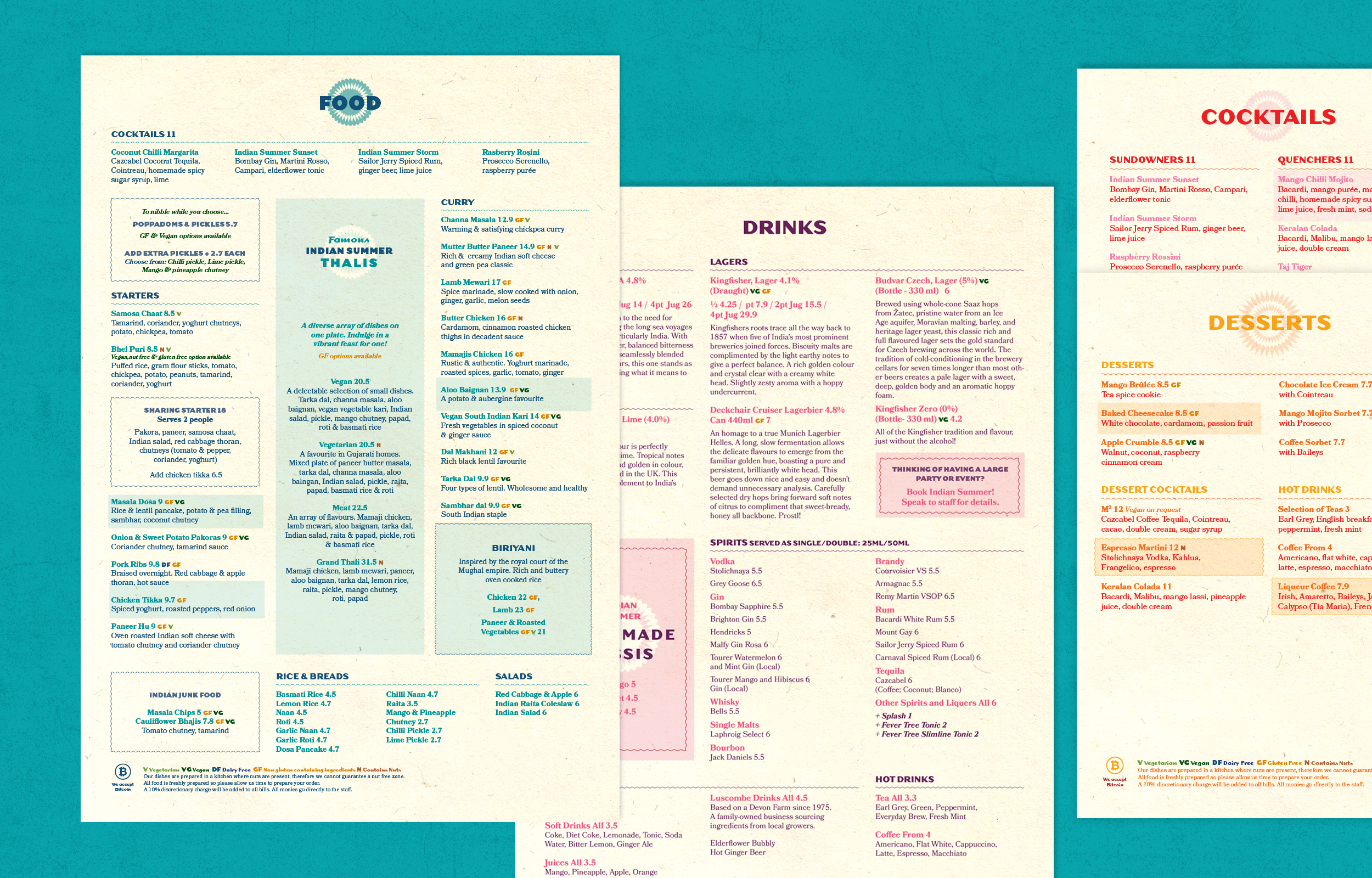
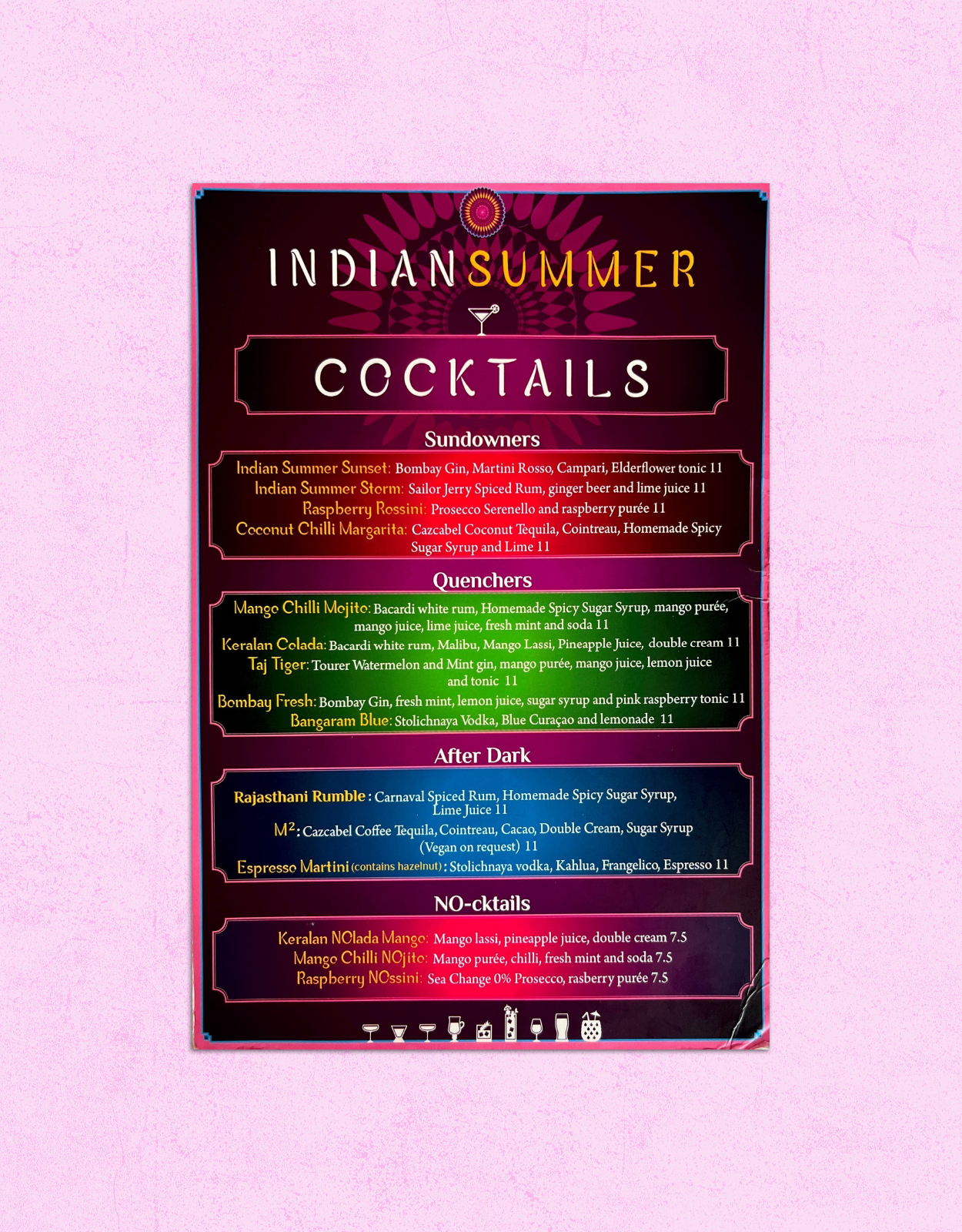
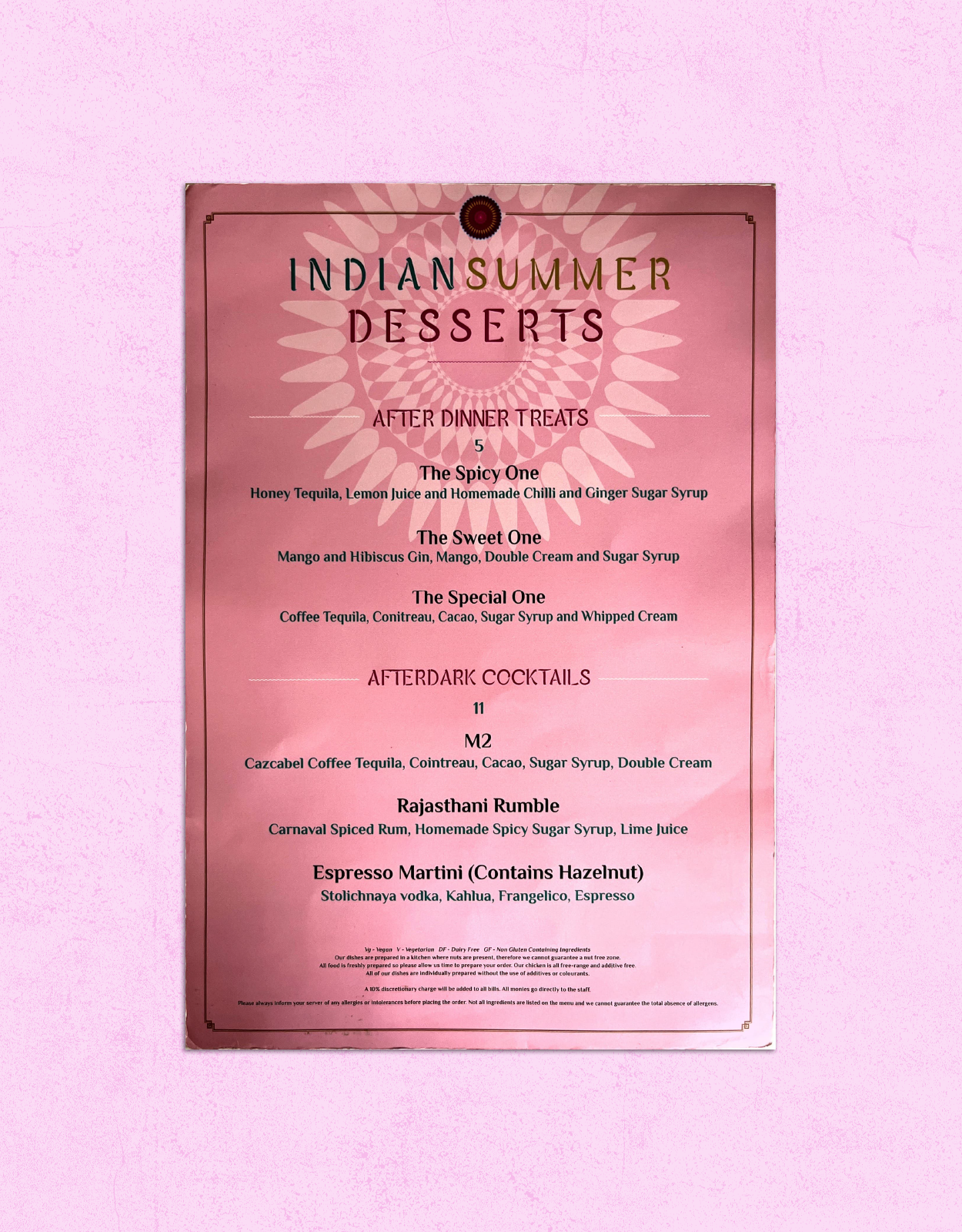
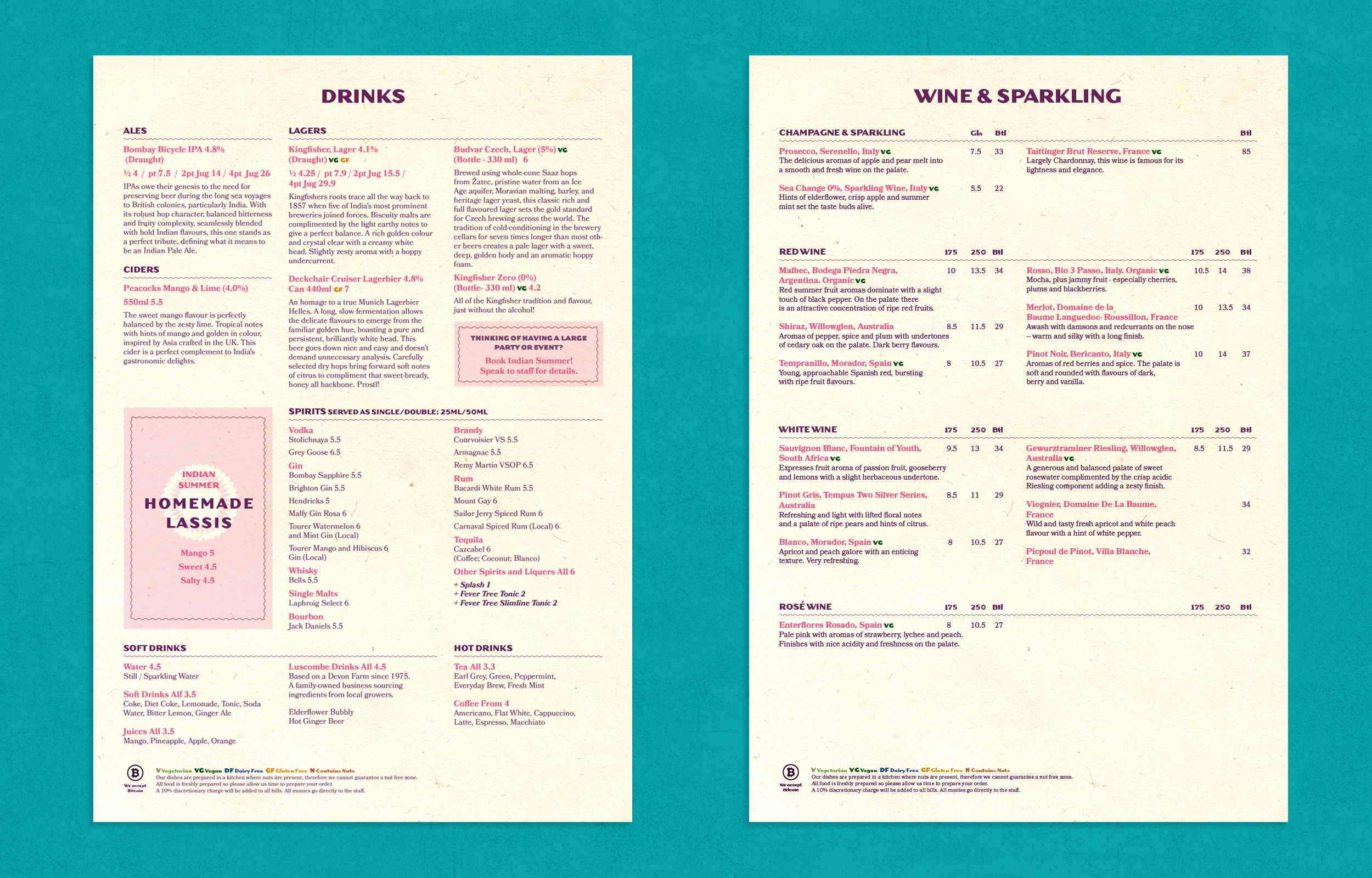
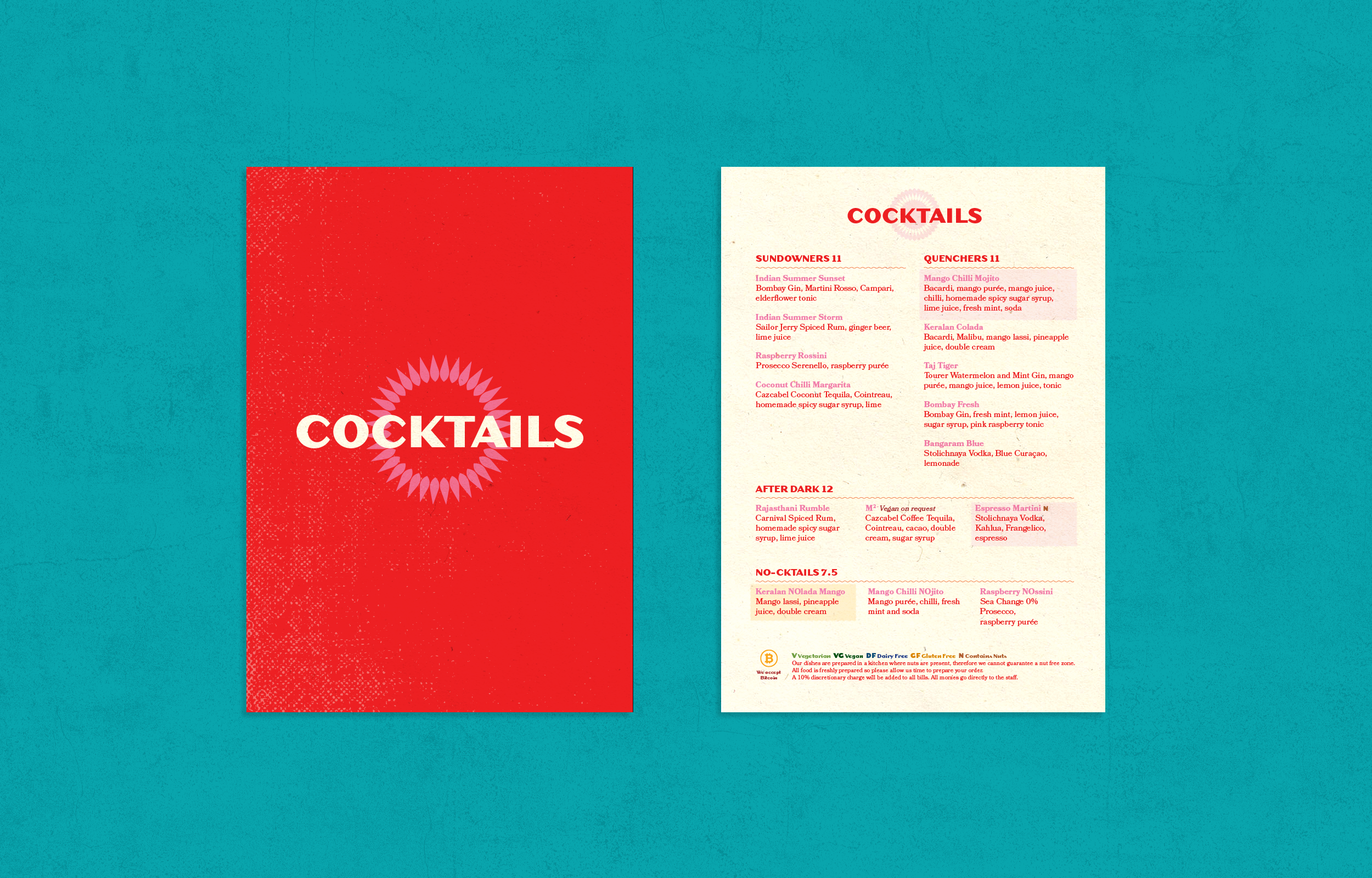
With a clear direction agreed, we developed two distinct design routes for the complete menu suite, including the lunch and dinner menu, set menu, dessert menu, wine list, and cocktail menu.
To address one of the key challenges identified during the discovery phase, we specified light backgrounds and high-contrast typography to improve legibility in the low-light conditions typical of restaurant environments. We also introduced a colour-coding system across the menu suite, allowing each menu to be instantly recognisable while creating a more cohesive and consistent customer experience.
The Outcome
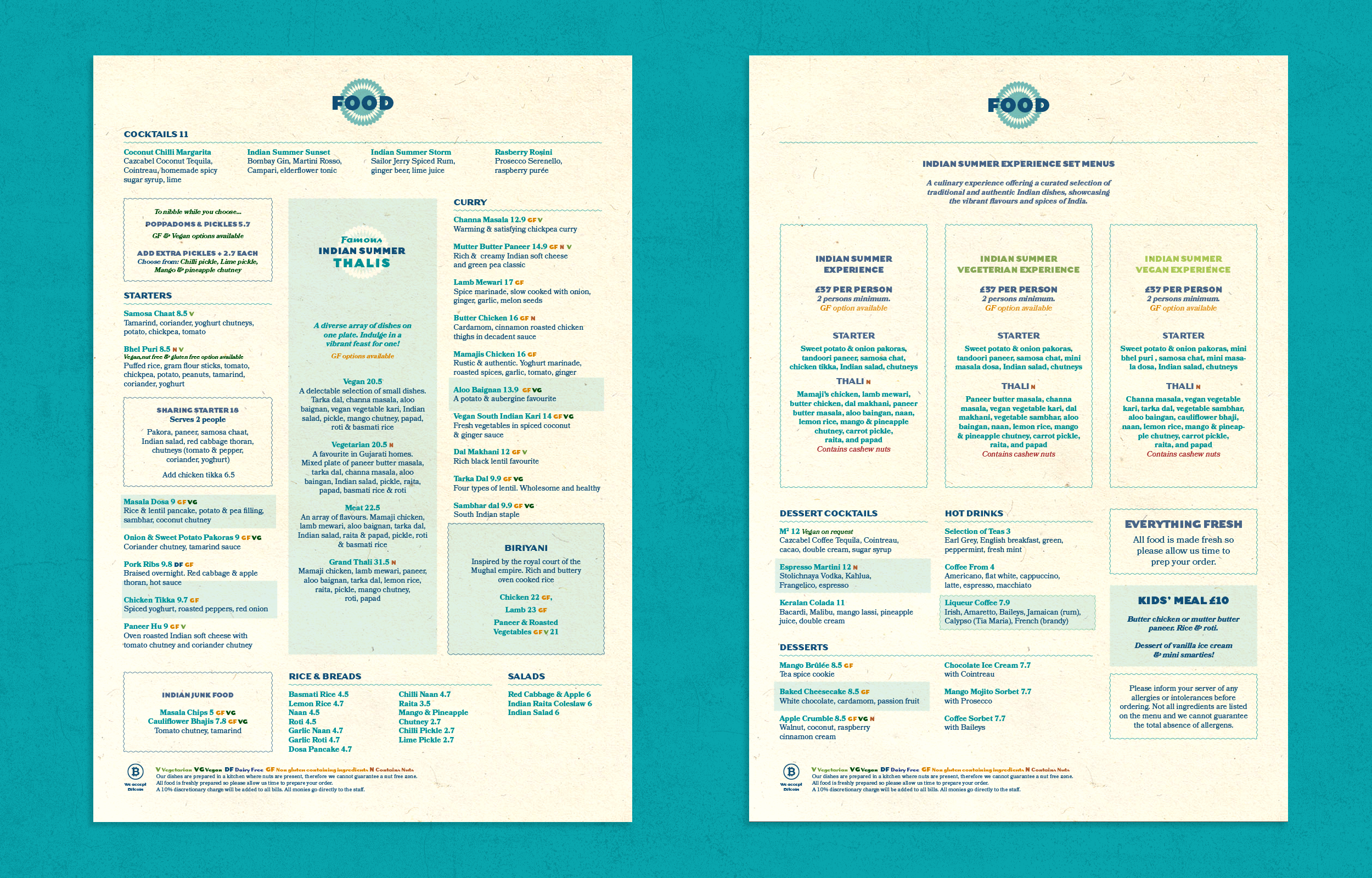
The final menu suite brought together practical, commercial, and brand considerations into a single, cohesive system. Information was restructured to improve clarity and navigation, making it easier for customers to explore the menu and understand the value of the offering.
The integration of the set menu within the main lunch and dinner menu increased its visibility and accessibility, helping to promote one of the restaurant's most important offers more effectively. Improved hierarchy, clearer categorisation, and the strategic use of colour created a more intuitive customer experience while giving the menu suite a stronger and more consistent visual identity.
Following the introduction of the new menus, Indian Summer reported an increase in customer numbers as well as a rise in average spend per customer.
While a range of factors contribute to business performance, the redesigned menu played an important role in presenting the restaurant's offer more clearly, encouraging exploration, and supporting customer decision-making.
The result is a menu system that works harder for both the restaurant and its customers. One that supports the dining experience, reflects the quality
of the food and hospitality on offer, and provides a flexible framework that can evolve alongside the business.
“ We couldn’t be happier with the work Good Noise Design Company did for Indian Summers restaurant in Brighton. They completely revamped our menus, creating a sleek, clean, and visually appealing design that perfectly reflects our brand.
Since launching the new menus, we’ve seen a remarkable 25% increase in both sales and footfall. The design not only grabs attention but also makes it easier for our customers to explore the menu and choose dishes. It has truly transformed the dining experience.”
— Rob Heasman, Owner, Indian Summer
Looking to Improve Your Restaurant Menus?
A menu is more than a list of dishes. It is one of the most important touchpoints within the customer experience and can have a significant impact on how guests perceive your brand, navigate your offer, and ultimately make purchasing decisions.
If your menus no longer reflect the quality of your food, service, or overall brand experience, we'd love to hear from you.
Get in touch to discuss your project.